Seized, Forfeited, Auctioned: Title, Not Authenticity
A state auction gives a buyer a documented chain of title that ordinary resale rarely provides. It does not certify authenticity, and the remedy it offers closes 14 days after the sale.
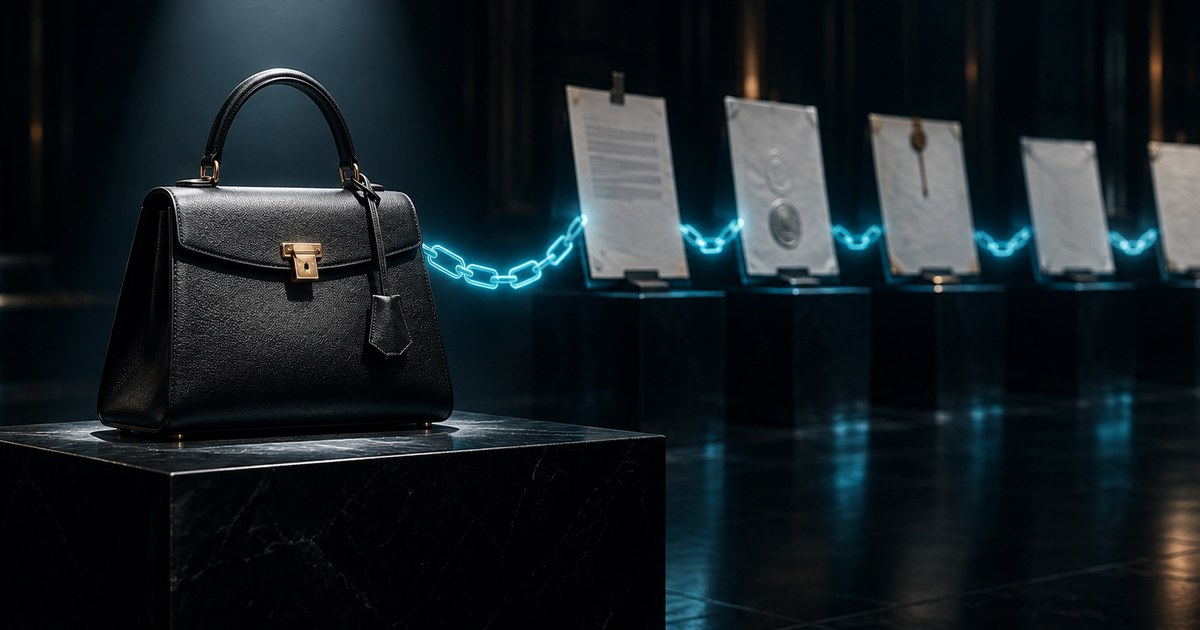
A state auction gives a buyer something ordinary resale rarely provides: a documented chain of title, from police seizure to court-ordered surrender to a state-appointed liquidator and a licensed auctioneer. What it does not give is a brand's stamp of authenticity, or a guarantee the next buyer can use.
That distinction is now visible at scale. On 20 September 2026, Hotlotz closed the first auction of luxury handbags and accessories forfeited in Singapore's S$3 billion money laundering case: all 337 lots sold, for more than S$1.1 million in total. A Louis Vuitton x Yayoi Kusama pumpkin bag reached S$87,000 after 81 bids, against an estimate of S$12,000 to S$16,000, as reported by Mothership. A second sale of 286 pieces of fine jewellery runs until 27 September, the first two of 15 online auctions planned through May 2027.
A chain of title documented by the state
The sale sits at the end of an unusually well-documented chain. The Singapore Police Force announced in November 2024 that about S$944 million in assets, 92.1 per cent of the assets seized from or otherwise linked to the ten convicted foreign nationals, had been surrendered to the State, with court orders covering a further S$1.85 billion linked to 15 other foreign nationals. In August 2026, Deloitte stated that the police had appointed it in July 2025 to manage and realise the forfeited non-cash assets, with more than 1,000 luxury items and over 80 properties to be sold in phases. Proceeds go to the Consolidated Fund, according to the Ministry of Home Affairs.
For a buyer, this answers a question resale usually leaves open: where did the seller's right to sell come from? Here the answer is a court order and a state appointment, published and dated. Deloitte also warned the public to deal only through the officially appointed auctioneers, a warning worth repeating because forfeited-asset stories attract impersonators.
What the buyer actually receives
The evidence pack is real but narrower than the headlines suggest:
- The lot record. Each item was catalogued with photographs and a description, and bidding was online only, with viewings at Le Freeport in Changi, per CNA's coverage.
- The invoice. The winning bidder pays the closing bid plus a buyer's premium. Hotlotz's buying guide sets 30 per cent including GST as the usual rate, 20 per cent for selected Fine series sales, and asks bidders to confirm the rate in each catalogue header; Mothership reported a 20 per cent premium, inclusive of GST, on this auction.
- The public trail. The catalogue, the bidding record and the results stay published, which lets a later buyer trace the item back to this sale.
- Included extras only if stated. Original packaging, boxes or brand certificates accompany a lot only when the lot description notes them, per the same buying guide.
What the sale does not give the buyer
A state sale is still an auction, and the auction terms matter more than the seller's identity. Under Hotlotz's Terms and Conditions, items are sold "as is", and the auction house's descriptions and authenticity assessments are opinions rather than statements of fact. The same terms note that only the original manufacturer may ultimately be able to attest an item's authenticity, a sobering sentence for anyone treating the catalogue as a brand certificate.
There is a limited authenticity guarantee, but read its edges. Hotlotz's 12-month authenticity guarantee is a marketplace guarantee: clause 5.5 confines it to items bought in the marketplace, clause 6.2 ties the 12-month window to a purchase via the marketplace, and clause 6.7 limits it to the original buyer. An auction buyer gets a shorter route: under clause 5.3, authenticity issues on an item bought in auction must be raised within 14 days of the auction closing, and the house may require written opinions from up to two recognised experts it agrees.
Two absences matter for resale. First, no brand has certified these bags: the maisons were not parties to the sale. Second, the auction remedy closes 14 days after the sale and belongs to the original buyer, so the person buying this bag in 2028 has nothing to invoke.
What the next buyer can still check
The resale value of a state-sale item rests on evidence that travels:
- The auction record itself. A named sale, a lot number, a published result and a dated invoice form provenance a buyer can verify against the auctioneer's site. Screenshots are weaker than the live record.
- The consignor chain. The Deloitte appointment and the police announcement are public; a seller claiming this provenance should produce an invoice matching the documented sale.
- The object, freshly assessed. Seizure proves where the state found the bag, not what it is. The next buyer still needs an independent authentication, since the auction's own assessment was an opinion and the house's remedy closed 14 days after the sale. The same separation applies to a brand certificate, whose status can be revoked after the sale, and to the records a maison publishes for its own pre-owned pieces.
Consider a fictional resale boutique offered the pumpkin bag in 2027. The seller shows a Hotlotz invoice naming the September 2026 sale. The boutique can confirm the lot and price against the published results, then still sends the bag for its own examination before listing it as that sale's bag, authenticated by the boutique, not by the State of Singapore.
The gap a verifiable record would close
Today, the strongest artefact the buyer holds is a PDF invoice and a web page. If either party's site changes or the buyer's email archive is lost, the proof chain weakens at exactly the link the next buyer needs. An item-level record whose contents cannot be quietly rewritten, anchored at the sale event itself, would let the provenance travel with the bag rather than with a filing cabinet.
That is the direction our work on verifiable item records explores: statements issued by identifiable parties, checkable later without depending on any single seller's servers. Read the protocol documentation to see how issued records stay verifiable.
Sources
- CNA: first auction closes, more than S$1.1m
- Mothership: Kusama bag at S$87,000 after 81 bids
- Deloitte press release, 29 August 2026
- Singapore Police Force: surrender of assets to the State, 18 November 2024
- MHA parliamentary answer on surrendered assets and the Consolidated Fund
- Hotlotz Terms and Conditions and Buying Guide
- CNA: auctions open, 7 September 2026