Galileo Protocol · MMXXVI
Back to Blog
dppesprinteroperabilityluxurytraceability

Tod's Gommino: Two Passport Stacks, One Source of Truth?

August 28, 2026Pierre Beunardeau

WWD reports Tod's new Digital Product Passport with Renoon. It is not the maison's first: Aura Blockchain Consortium and Temera NFC passports have shipped since November 2023, on the My Gommino since March 2025. One product line now carries two passport stacks — NFC for authenticity, QR for sustainability data. When the customer scans, which attestation wins?

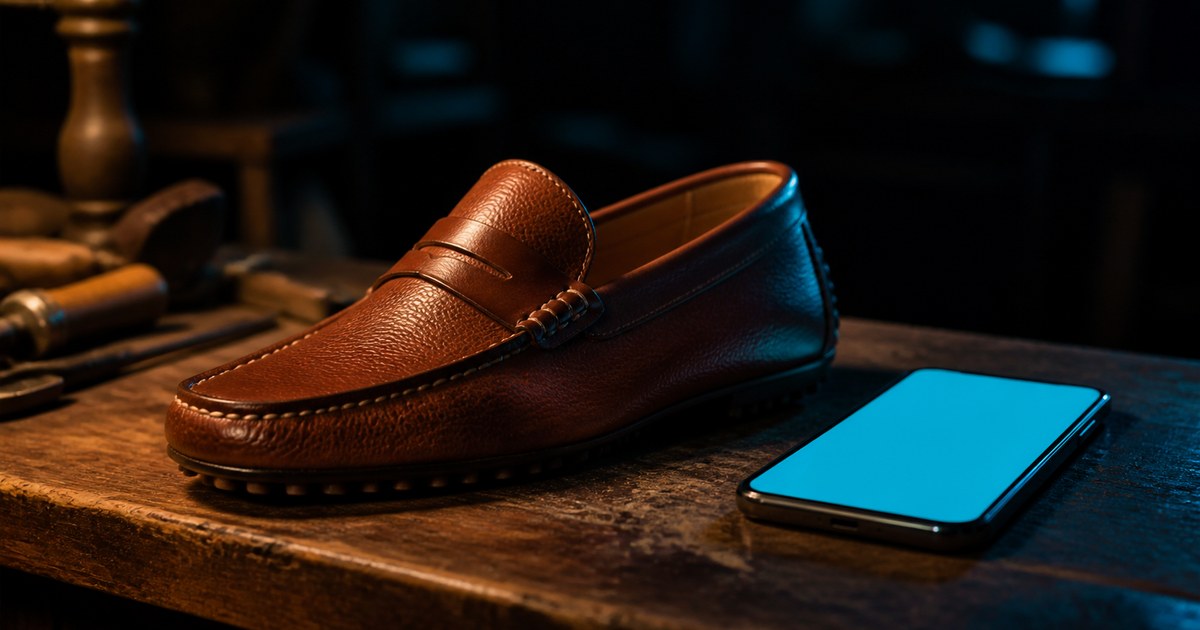
A handcrafted leather driving loafer on a craftsman's workbench beside a smartphone with a glowing cyan screen, in a dim luxury atelier

Tod's did not launch its first Digital Product Passport this week — it announced a second passport programme. WWD reported on 28 August 2026 that the maison is rolling out QR-based passports with Renoon on its signature Gommino loafers. The same product line has carried Aura Blockchain Consortium NFC passports on the My Gommino collection since March 2025.

Two passport programmes, two Gommino sub-ranges, two carriers, two data layers — documented. Whether a single pair will ever carry both carriers is not. If, or when, it does, which attestation becomes the source of truth? That question is no longer theoretical. It is the exact interoperability problem the EU's Digital Product Passport framework will put in front of every maison — and Tod's just became its most concrete public case.

What WWD reported on 28 August 2026

The WWD piece, dated 28 August 2026, announces that Tod's is launching Digital Product Passports on its website with Renoon, a compliance-focused provider. The rollout starts with the signature loafers and will extend to other products. The passports publish materials, production processes, locations and company certifications, delivered through QR codes.

Renoon's role, per the article, is data plumbing. The company "structures and confirms consistency of product and supply chain data across both Tod's internal systems and those of its partners". Renoon CEO Iris Skrami frames the work as deep infrastructure: most companies have the data somewhere, but fragmented and unstructured.

Two details matter for what follows. First, WWD states that the data in Tod's DPPs "will be ensured through the Aura Blockchain Consortium, which the brand joined in 2023". Second, Tod's general brand manager Carlo Alberto Beretta presents the passport as bringing "verified product information directly into the customer experience". Verified by whom, and against which registry, is precisely the open question.

One caution on framing: the WWD headline travel wires, and some aggregator pickups, call this Tod's "first" Digital Product Passport. It is not, and the record below is unambiguous.

The passport the Gommino already had

Tod's passport history is documented by the Aura Blockchain Consortium itself.

20 November 2023. Tod's joins the Aura Blockchain Consortium and ships its first DPP on the custom Di Bag. Each bag is linked to what Aura calls an immutable traceability token. The passport carries product certificates, origin and craftsmanship data, and ownership certificates.

14 March 2025. Tod's extends the Tod's Passport to the My Gommino collection, with Aura and its ecosystem partner Temera. Each pair embeds an NFC chip in the right sole. Scanning it lets the customer register the product, claim official ownership, and access a secure digital certificate of authenticity stored on the Aura Private Blockchain. A wallet card, linked to the Tod's CRM, extends the experience in store. Aura's CEO Romain Carrere celebrated the milestone at the time, telling The Modems in March 2025 that "transparency, authenticity, and customer experience can go hand in hand".

The maison's own DPP page confirms the architecture as it stands: Aura blockchain technology plus the NFC tag. It covers the Di Bag and the My Gommino, with materials origin, production-chain locations and premium benefits such as extended warranty.

Tod's passport history — one maison, two stacksAura/Temera NFC since 2023 · Renoon QR added 28 Aug 202620 Nov 2023Di Bag · Aura · NFC14 Mar 2025My Gommino · Aura + Temera · NFC28 Aug 2026Loafers · Renoon · QRSame product line, two live stacksSource: Aura Blockchain Consortium (2023, 2025), WWD (2026), linked inline.

So the Renoon announcement is not an entry into product passports. It is the arrival of a second stack on a product line that already had one.

What Renoon adds — and what it does not

The two stacks are not redundant. They answer different questions.

The NFC layer is an authenticity and ownership instrument. Its core attestation is a certificate of authenticity on the Aura Private Blockchain, bound to a chip embedded in the shoe. Its job is to answer: is this pair genuine, and who does it belong to?

The QR layer is a compliance and transparency instrument. Per WWD, it publishes materials, production processes, locations and certifications — the data categories the ESPR will progressively mandate. Renoon's own footwear DPP page describes the typical carrier mix. QR codes serve as the primary carrier, GS1 Digital Link connects product and record, and NFC covers "selected authentication or premium product experiences".

Renoon is not a newcomer pitching a pilot. Its homepage claims more than 30 live case studies and over 10 million passport-ready products. What its site does not publish today is any documentation of the Tod's integration itself. We checked its full public sitemap and found no Tod's case study or announcement. The deal is documented only by WWD's reporting.

One product line, two passports: who is the source of truth?

Here is the scan a customer may soon perform on the Gommino line. They tap the NFC chip in the right sole and land on the Tod's Passport: authenticity certificate, ownership, warranty, CRM-linked services. Or they scan a QR code and land on the Renoon-powered page: materials, production locations, certifications. Two entry points, two backends, two operators — Temera and Aura on one side, Renoon on the other. One caveat before drawing conclusions: the NFC passport ships on the custom My Gommino, and WWD describes the QR rollout as starting with signature loafers. Whether the same pair will ever carry both carriers is not documented; the scenario that follows is what happens if, or when, it does.

One line, two scans — which layer answers?Customer scans the GomminoNFC chip, right soleQR codeAura + TemeraRenoonAura Private BlockchainAuthenticity certificateOwnership · warranty · CRM"Is this pair genuine?"Renoon data layerMaterials · production sitesCertifications"How was this pair made?"Dashed link: Renoon data "ensured through Aura" (WWD)Undocumented: any reconciliation layer if the two attestations ever disagree.Sources: tods.com, auraconsortium.com, WWD 28 Aug 2026.

In the benign case, nothing conflicts. The NFC certificate says the pair is genuine; the QR page describes how it was made. The customer never notices the seam.

But seams become visible exactly when it matters. Three scenarios:

  1. Disagreement. The sustainability layer states a material origin that the authenticity layer's production record does not corroborate. Which record does a regulator, a reseller or a court treat as authoritative?
  2. Divergent lifecycle events. The QR passport lists a repair; the NFC certificate knows nothing of it. At resale, the buyer reads two partial histories of one object.
  3. Operator risk. One vendor sunsets its platform, or the maison switches providers. Which half of the product's memory survives the migration?

WWD's line about Renoon data being "ensured through" Aura hints at a shared integrity anchor. If accurate, Aura's chain would anchor both claim sets — a sensible architecture. But no public documentation confirms how the anchor works, who writes to it, or which attestation prevails in a conflict.

QuestionNFC stack (Aura + Temera)QR stack (Renoon)
Primary claimAuthenticity, ownershipMaterials, production, certifications
CarrierNFC chip in the right soleQR code
BackendAura Private BlockchainRenoon data platform
Copy-resistant carrierTypically, dynamic chip authenticationNo, printed and photographable
Regulatory driverAnti-counterfeiting, customer engagementESPR compliance preparation
Documented sinceNov 2023 (Di Bag), Mar 2025 (My Gommino)Aug 2026 (WWD only)

Why the ESPR registry will not tolerate ambiguity

Tod's is moving early. Renoon's own footwear page notes that no footwear-specific DPP delegated act exists yet, and the Commission's preparatory study is planned for the end of 2027. Nothing forced this launch except strategy.

But the direction is set. When the EU DPP registry and standards went live, the passport stopped being a brand experience. It became market infrastructure: one product, one passport, resolvable by systems the brand does not control. And as we noted when reading LVMH's group-level DPP strategy, the majors are consolidating their passport estates precisely because fragmentation does not scale.

The ESPR logic assumes one coherent passport per product, at model, batch or item level as set by each product group's delegated act. A maison running two stacks with two operators and two carriers will face a question its marketing never had to answer. Which attestation is authoritative for which claim? And how does a third party verify the linkage between them, in a machine-readable way? That is an interoperability contract, not a storytelling choice. Tod's is simply the first maison where the question is visible from the outside, because both of its stacks are.

The limits of what we know

Intellectual honesty about this file.

  • The Renoon integration is documented only by WWD. Renoon's public site, checked today, documents neither the deal nor the Tod's data model. Tod's own DPP page still describes only the Aura/NFC architecture at the time of writing. Tod's Group's newsroom could not be consulted directly (access restrictions); the 2023 and 2025 history is corroborated by Aura's own releases.
  • The QR passport's actual content is not public. We have not seen a live Renoon-powered Tod's passport. The data categories above come from WWD's description, not from the product.
  • The "ensured through Aura" mechanism is unverified. WWD states it; no primary source we could consult today explains the technical linkage between Renoon's data and Aura's chain.
  • We do not know whether the two carriers will coexist on the same pairs. The rollout may target different SKUs, regions or sales channels. WWD says the rollout begins with signature loafers and will extend.
  • A passport stack does not solve physical binding. As detailed in our analysis of the Louisville counterfeit seizures, a QR code can be photographed and a genuine NFC response can be relayed onto a fake. Two stacks double the attestations; they do not double the proof that the object in hand is the attested one.

Galileo's take

Galileo's take: the Tod's file is the interoperability question, dated. One maison, one product line, two passport stacks — each legitimate, each answering a different question, neither publicly reconciled with the other. This is not a criticism of Tod's, which is ahead of the regulatory curve and transparent about its suppliers. It is a preview of what every maison will manage as ESPR enforcement approaches. Authenticity attestations born from anti-counterfeiting, sustainability attestations born from compliance — and a customer, soon a registry, expecting one coherent answer.

The fix is not picking a winner between NFC and QR, or between consortium chains and compliance platforms. Carriers are a UX choice; registries are a trust choice. The fix is a layer where attestations verify independently of the operator that issued them. On an open protocol, authenticity claims, materials claims and lifecycle events about the same item resolve to one verifiable identity. That identity stays readable by systems the maison does not control — resale platforms, customs tooling, the EU registry itself. That is the layer Galileo Protocol builds: item-level digital twins, interoperable attestations, personal data off-chain, schemas published openly in our specifications. A maison should be able to run Aura for certificates and Renoon for sustainability data — and still present one coherent, verifiable product identity to the world. Explore the documentation or contact us to discuss what that reconciliation layer looks like for your maison.

Sources

FAQ

Is the Renoon passport Tod's first Digital Product Passport?

No. Tod's has shipped Digital Product Passports with the Aura Blockchain Consortium since 20 November 2023, starting with the custom Di Bag. The maison extended the same NFC-based Tod's Passport to the My Gommino collection on 14 March 2025, with traceability by Temera. The Renoon partnership announced on 28 August 2026 adds a second, QR-based data layer.

What is the difference between Tod's NFC passport and the new QR passport?

They carry different claim sets. The NFC passport, built with Aura and Temera, certifies authenticity and ownership: a secure digital certificate stored on the Aura Private Blockchain, product registration and premium services. The QR passport, built with Renoon, publishes materials, production processes, locations and company certifications — the sustainability and compliance data layer.

Which passport is the source of truth when a customer scans?

Today, each programme vouches only for its own claims. The NFC chip answers "is this pair genuine and who owns it"; the QR code answers "what is it made of and how was it produced". No public documentation describes a reconciliation layer between the two data layers. WWD reports that Renoon's data will be ensured through the Aura Blockchain Consortium, which suggests a shared integrity anchor — but the architecture is not public.

Does EU regulation require two passports on one product?

No. Under the ESPR (Regulation (EU) 2024/1781, Articles 9 to 13), each product gets one Digital Product Passport, connected to a persistent unique product identifier. The number of carriers is not fixed: Article 9(2)(b) lets each product group's delegated act define "one or more data carriers" — QR code, NFC tag, or both. For footwear, no delegated act has been adopted yet; according to Renoon's footwear DPP page, the European Commission's preparatory study is planned for the end of 2027. Tod's is moving ahead of the mandate — and previewing the interoperability problem every maison will face.

Can a QR code prove a shoe is authentic?

No. A QR code is a printed, copyable carrier: it links to data, but anyone can photograph and reproduce it. Authenticity requires a cryptographic check that a copy cannot pass — typically a dynamic NFC authentication. Even then, proving the genuine chip is still inside the genuine shoe, the physical-binding problem, remains open engineering work, as we detailed in our Louisville seizures analysis.